
Already with the demise of the Great Pumpkin, comes the rise of tinsel and lights. Jiggle bells today translates to the hum of trucks delivering good tidings. While e-commerce continues to outpace brick & mortar, it also creates major financial problems with free shipping promos and last mile deliveries. Last year alone, the US Postal Service lost $5 billion and Amazon $3 Billion on free shipping. To buck this trend, Amazon, Google and Walmart are actively experimenting with drones to ship goods.
However, this week the founders of Skype, Ahti Heinla and Janus Friss, think there terrestrial delivery platform is the big idea:
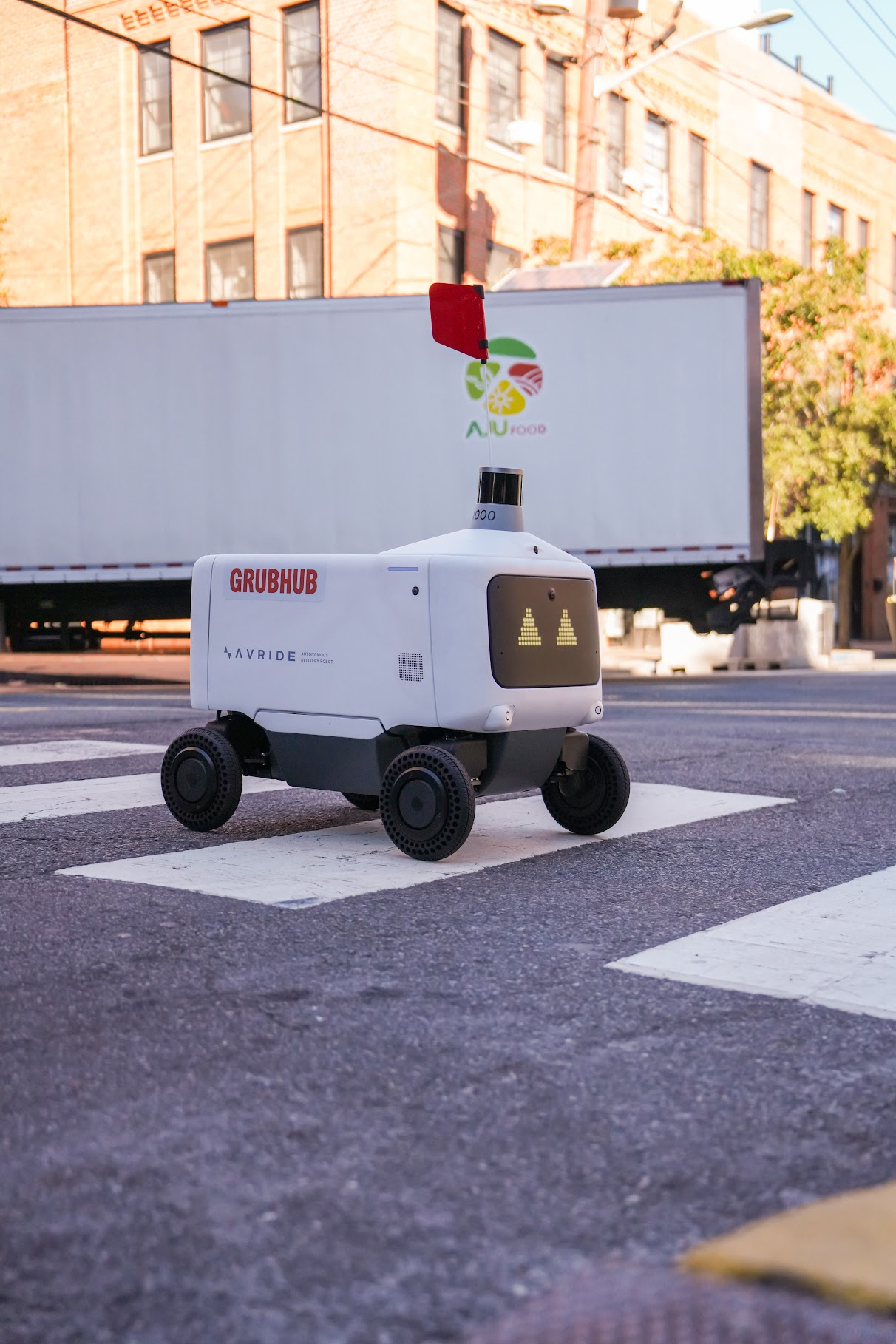
The London-based Starship uses a secure box on wheels to deliver goods within 30 minutes. With six wheels and an integrated array of sensors, the Starship rover can make autonomous deliveries within a 3 mile radius. The box can hold about two grocery bags worth of goods, and deliveries can come from retail outlets or dedicated Starship hubs.
“The last few miles often amounts to the majority of the total delivery cost,” said Heinla, now CEO of Starship. “Our robots are purposely designed using the technologies made affordable by mobile phones and tablets – it’s fit for purpose, and allows for the cost savings to be passed on to the customer.”

Customers will be able to track the box as it moves at about the pace of a brisk walk. When the delivery arrives, they can use the same app to unlock the box. The delivery market is currently seeing a lot of disruption. While programs like UberEats and Amazon Prime Now are aiming to use existing infrastructure to facilitate faster deliveries, the ultimate goal seems to be unmanned deliveries. Just last week, Walmart asked for Federal Aviation Administration approval for testing drone deliveries, joining Amazon and Google in a bid to expand delivery options.
Starship’s delivery model may be appealing to vendors who don’t want to deal with FAA approval but still want the benefits of unmanned deliveries. Since Starship rovers are able to use sidewalks instead of the skies to get around, they avoid much of the existing regulations on autonomous vehicles. That’s not to say municipalities won’t place restrictions on their use in the future, but the sidewalk is a lot more open than the skies at the moment. People also don’t have to worry about rovers falling out of the sky and dropping on their heads.
While the system is 99% autonomous, Starship said human operators will be overseeing trips to step in if things go haywire. Starship vehicles will be no more than 40 pounds when fully loaded, so they won’t crush your toes too bad if they decide to go rogue. And a flag on top means you won’t be tripping over it very easily.
Starship is currently demonstrating prototypes and testing its devices. It plans to launch in conjunction with retailers and service providers in the U.S., U.K. and other countries in 2016. Next year, Santa may be driving an autonomous sleigh followed by a swarm of drones and terrestrial ships. Poor Rudolph will have to retire.



Leave a Reply to Killer Robots, Superior AIs, Car Hacking – Don’t Worry, Be Happy… |Cancel reply